
Automotive nearshoring
Automotive nearshoring to Mexico: an engineer’s transfer playbook
A practical guide to USMCA uncertainty, supplier qualification, PPAP gates, sub-tier risk, logistics and the evidence required before automotive production moves to Mexico.
Decision brief
Key takeaways
- Start with supply continuity and approval evidence, not with a country-versus-country unit-price comparison.
- The July 2026 USMCA review did not renew the agreement in its current form, but the agreement remains in force while the parties continue negotiations.
- Rules of origin must be connected to the real bill of materials and engineering-change process; a Mexico factory address alone does not establish preferential origin.
- Audit the producing site, the actual value stream and the critical sub-tier suppliers—not only the corporate presentation.
- Move volume only after defined feasibility, first-article, PPAP, run-at-rate and customer-approval gates are passed.
Begin with continuity, not geography
Automotive nearshoring is not a freight move. It is a controlled source qualification in which the product definition, tool, material, process knowledge, inspection method, approval record and supply bridge must arrive together. If one of those elements is missing, the new location can reproduce the part’s shape without reproducing the approved process.
This framing matters psychologically as well as technically. Teams under pressure often reach for the most visible decision—choose Mexico, choose a supplier, move the tool—because it creates a feeling of progress. A stronger plan delays the irreversible decision until the evidence is ready. The first deliverable is therefore a risk map: what must remain uninterrupted, what must be recreated, who can approve each change and which unknown could stop the launch.
Use the current USMCA position, not an old assumption
The 2026 joint review changed the planning context. On July 1, 2026, the United States did not agree to renew USMCA in its current form. The Office of the U.S. Trade Representative also stated that the agreement remains in force while the parties continue addressing open issues. That means a current program can still operate under USMCA, but a long-range sourcing case should not assume that every rule and enforcement practice will remain unchanged.
Treat preferential tariff treatment as a product-specific compliance result, not a generic benefit of manufacturing in Mexico. The exact tariff classification, origin calculation, traced content, records and certification must be confirmed for the program. Engineering, purchasing, customs and the customer’s trade-compliance team should work from the same bill of materials and the same change record.
- Record the current HTS classification and program-specific origin method.
- Stress-test the business case if rules, documentation requirements or enforcement become stricter.
- Reconfirm origin whenever a material, component, supplier or manufacturing step changes.
- Use qualified customs and legal advisers for the final compliance position.
Put rules of origin inside engineering change control
USMCA automotive rules can reach far below final assembly. Passenger vehicles and light trucks are subject to a 75 percent regional-value-content requirement under the applicable method, while particular core, principal and complementary parts have their own thresholds and tracing rules. Vehicle producers also face North American steel and aluminum purchasing requirements and labor-value-content requirements. The details depend on the part and the program, so a headline percentage is a starting point—not a certificate of origin.
The operational lesson is simple: an engineering change can also be an origin change. A resin substitution, imported insert, new fastener source or alternate sub-tier may be technically acceptable and still alter the trade result. Add origin impact to the engineering-change checklist before a substitution is approved, not after finished goods reach the border.
Audit the producing site and the evidence it will own
A certificate, machine list or customer logo does not qualify a production line. Verify the legal entity, facility address, scope, expiration and registrar for every claimed certification. Then walk the exact value stream that will make the component and review records generated by the actual gauges, machines and shifts.
Vulcan’s public position is intentionally precise: our operations are built around IATF 16949 standards and certification is in progress. A customer should verify current, site-specific status before relying on any certification claim. The same standard should be applied to every candidate supplier.
- Named program team, escalation path and launch capacity.
- Feasibility record connecting drawing, material, tool, machine, auxiliaries and measurement.
- Control plan, PFMEA, MSA, capability evidence and reaction plans appropriate to the program.
- Tool maintenance, spare-component and contingency plan.
- Disclosure and approval of every critical subcontracted process.
- Financial, labor, power, water and logistics risks that could interrupt the producing site.
Build qualification around gates, not optimistic dates
There is no honest universal promise for qualifying a new automotive source. Timing changes with tooling condition, process maturity, customer-specific requirements, material approvals, gauges, laboratory work and whether the supplier has run a comparable process before. A date-only schedule encourages teams to declare progress; a gate-based schedule requires proof.
Keep the incumbent source and bridge inventory active until the new source demonstrates the approved part, process and capacity. A compressed calendar is valuable only when it comes from existing capability and fast evidence—not from skipping the evidence.
- Gate 1 — ownership, drawing, specification and change-authority confirmed.
- Gate 2 — tool and machine feasibility approved with open risks visible.
- Gate 3 — first articles meet dimensional and material requirements.
- Gate 4 — PPAP or the customer’s required approval package is accepted.
- Gate 5 — run-at-rate, process capability and containment exit criteria are demonstrated.
- Gate 6 — customer-authorized cutover with contingency and traceability preserved.
Map the sub-tier network before claiming resilience
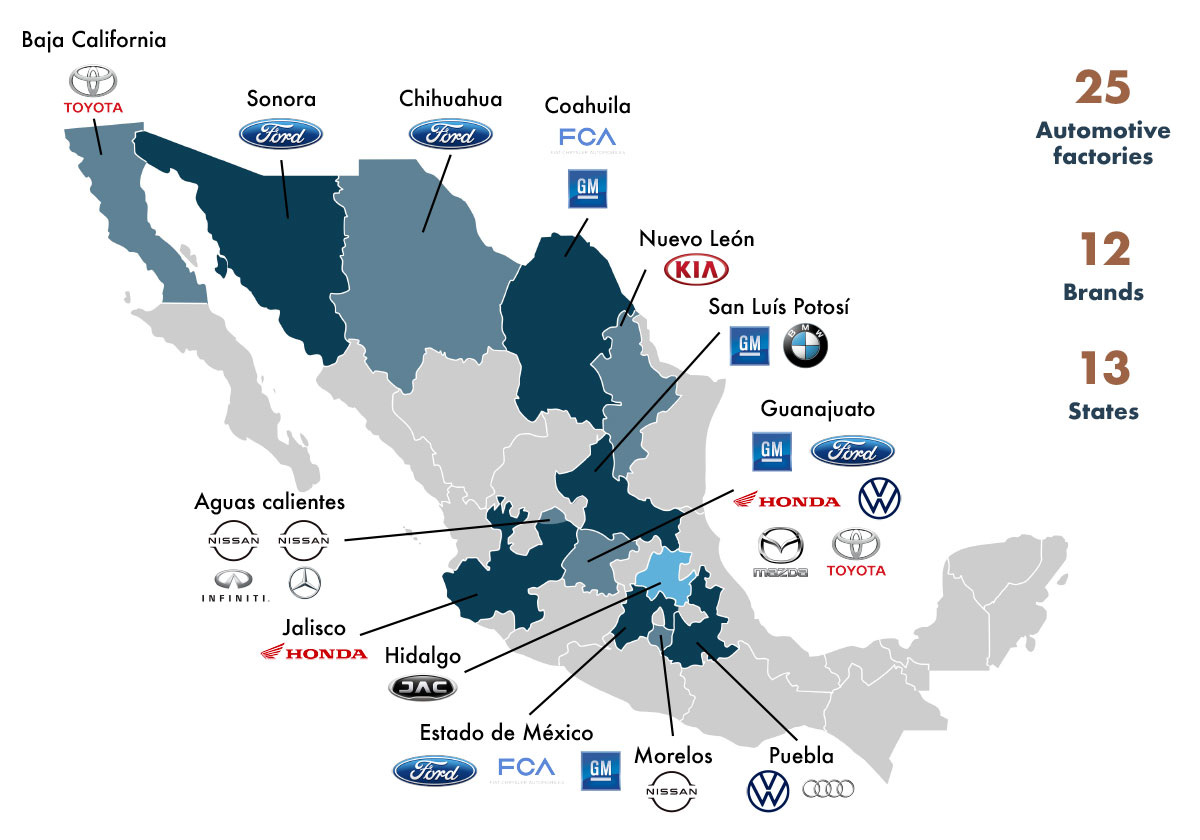
Mexico has mature automotive clusters, especially across the northeast and the Bajío, but process depth is commodity-specific. A Tier 1 may operate a capable Mexico plant while critical electronics, specialty materials, bearings, fasteners or other inputs still cross an ocean. That does not invalidate nearshoring; it changes where the remaining lead-time, origin and disruption risk lives.
Map at least the critical sub-tiers, their country of origin, qualification status, replenishment time and alternate source. For molded plastic, liquid silicone rubber and conventional rubber components, localizing the tool, process, metrology and production team together can remove more risk than moving final assembly alone.
Engineer the logistics lane
Central Mexico can support much shorter replenishment to many U.S. manufacturing corridors than trans-Pacific ocean freight. Vulcan uses roughly one week as a planning target for many lanes, subject to origin, destination, carrier, border crossing and customs. It is not a universal transit guarantee.
The business value is not only fewer days in transit. Shorter lanes can reduce the amount of inventory exposed to engineering changes, make smaller replenishment lots practical and allow faster containment when a quality problem occurs. The lane still needs a carrier plan, customs documentation, crossing variability, cargo-security controls and enough buffer for the real route.
Recognize the predictable failure modes
Nearshoring programs often fail outside the quoted molding cycle. The supplier may lack contracted electrical capacity, a critical material may remain single-sourced overseas, labor turnover may consume the launch team, or an undisclosed subcontractor may control the step that actually creates the defect. These risks deserve the same status as dimensional capability.
The strongest countermeasure is not a longer supplier questionnaire. It is direct evidence: utility capacity and interruption history, sub-tier mapping, named launch personnel, on-floor process data, tool records, real logistics trials and a cutover plan that can pause without stopping the customer.
Where Vulcan fits
Vulcan supports molded-component programs from León, Guanajuato across plastic injection, liquid silicone rubber, silicone injection molding and conventional rubber processing. We connect product and manufacturing engineering, mold design and tooling, metrology, PPAP-grade evidence and production under one accountable program path.
For a transfer, we begin with ownership, tool condition, machine fit, approved materials, gauges, quality history, bridge inventory and customer authorization. IMMEX and USMCA considerations are reviewed for the exact qualifying operation; they are not presented as automatic tariff outcomes. Our IATF 16949 certification remains in progress, and current status is stated plainly rather than implied.
Frequently asked
Questions buyers ask before a transfer
Is USMCA still in force after the July 2026 joint review?
Yes. USTR stated that the United States did not renew the agreement in its current form, but USMCA remains in force while the parties continue negotiations or until the agreement is terminated. Programs should monitor the negotiations and verify current requirements with qualified trade advisers.
Is a supplier’s IATF 16949 certificate enough to approve a transfer?
No. Verify the legal entity, producing-site address, scope, registrar and expiration, then audit the actual value stream, program team, sub-tiers and evidence. Vulcan does not claim completed certification; its operations are built around IATF 16949 standards and certification is in progress.
How long does an automotive manufacturing transfer to Mexico take?
There is no universal duration. Tool condition, process maturity, customer-specific approval, material validation, gauges, sub-tier qualification and run-at-rate requirements control the schedule. Plan with evidence gates and preserve the bridge source until approval and capacity are demonstrated.
What should move with an automotive mold?
Move or recreate the tool record, approved drawing and specifications, material sources, process window, auxiliaries, gauges, inspection method, maintenance history, control plan, approval evidence, traceability and change authority. The physical mold alone is not the production process.
Editorial sources
Sources and current references
These sources support the policy and market context. Program-specific legal, customs, certification and commercial decisions still require current professional review.