
Product development
Nearshoring product development to Mexico: shorter feedback loops, better launch decisions
How proximity changes DFM, first articles, pilot builds, inventory commitments and product architecture—and where Asia still retains an advantage.
Decision brief
Key takeaways
- Distance changes product decisions: long feedback delays encourage larger bets, earlier design freezes and fewer experiments.
- Mexico’s main development advantage is not necessarily a faster molding cycle; it is faster access to the people, parts and evidence needed for the next decision.
- Compare total cost, including inventory, obsolescence, engineering time, rework and launch exposure—not only the ex-factory quote.
- Asia can remain the best source for early prototypes and electronics-heavy component ecosystems; many successful programs use a hybrid architecture.
- A bounded pilot with written learning goals is safer than an immediate full-program transfer.
Distance is a design constraint
A long supply pipeline does more than delay a shipment. It changes how a team behaves. When each sample loop consumes weeks, teams combine changes into larger batches, order more validation units than they need and freeze the design earlier because another loop could threaten the launch date. The calendar starts deciding the product before the evidence does.
That is the psychological cost of delayed feedback: uncertainty becomes uncomfortable, so teams replace learning with commitment. A nearer manufacturing partner can reduce that pressure by making smaller experiments, direct engineering conversations and faster first-article review practical. The goal is not endless iteration. It is one more useful loop before an expensive decision becomes irreversible.
The proximity dividend is an operating system
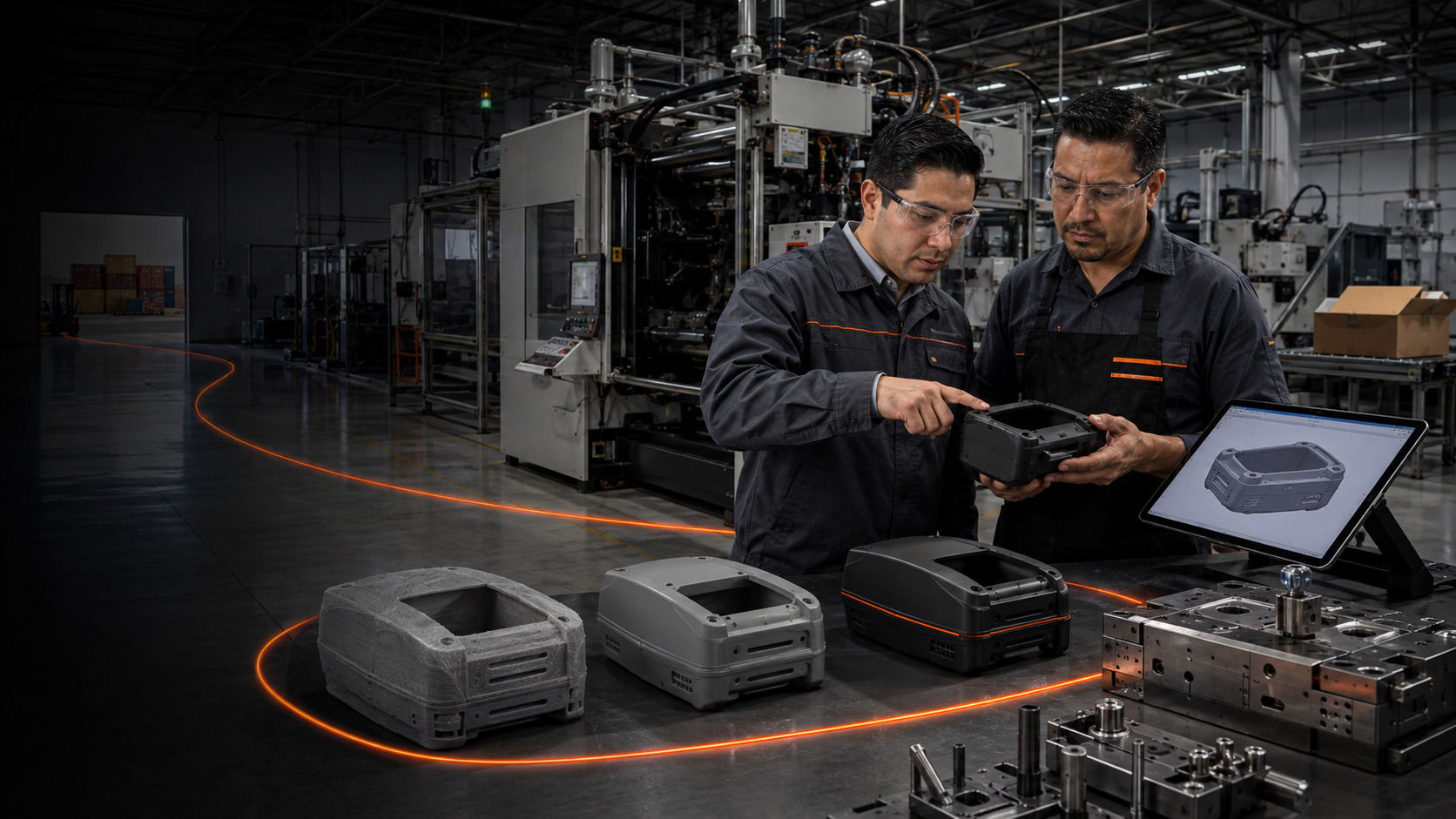
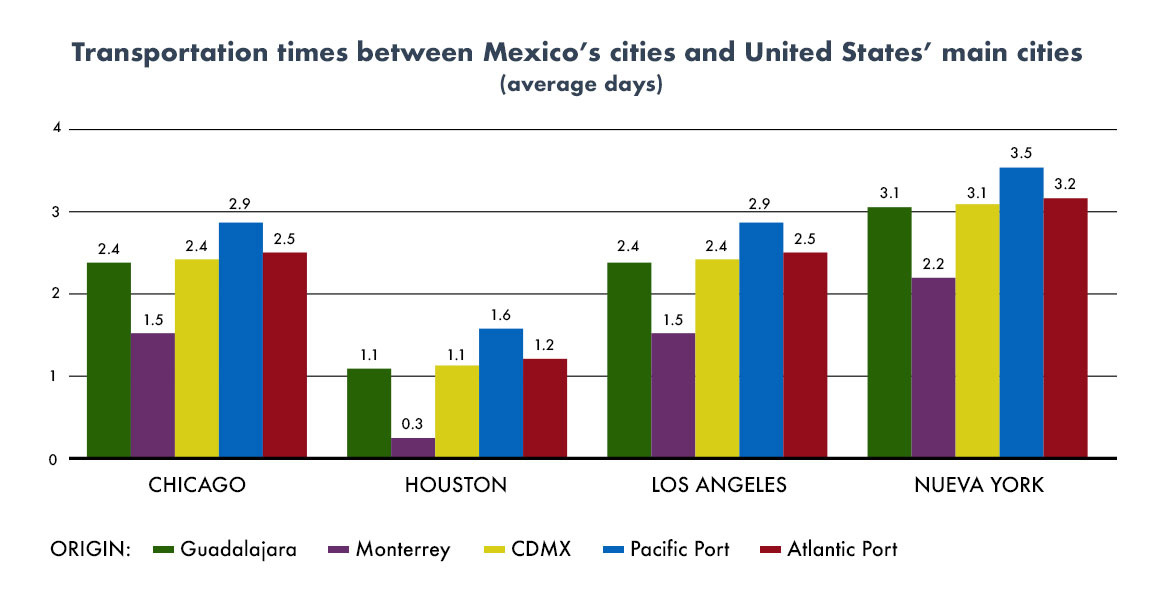
Mexico and the United States share overlapping workdays. Questions can move from the customer’s engineer to the toolmaker or process owner without an overnight handoff. Plant visits require less travel, first articles can move by ground or short-haul air, and quality containment can happen while the program team still shares the same working day.
None of this eliminates normal engineering work. The part still needs DFM, a capable tool, the correct material, measurement, testing and approval. Proximity improves how quickly the team can see a problem, agree on the evidence and choose the next action. It is a communication and decision advantage before it becomes a logistics advantage.
- DFM questions answered with the part, tool and process in the same conversation.
- First-article findings returned while the launch team and tooling context are still active.
- Smaller pilot lots that expose problems without creating a large obsolete inventory position.
- Faster containment and engineering-change cut-in with less material trapped in transit.
Know what proximity does not solve
Mexico is a large, capable manufacturing economy, but its strengths are clustered by process and region. The country is not a copy of the Pearl River Delta. Fast-turn prototype shops, component markets and very-low-volume suppliers are less dense, while some electronics, batteries, displays, specialty materials and components still depend on Asian ecosystems.
A credible nearshoring plan therefore begins with process fit. Mexico can be a strong production and industrialization platform for molded plastic, silicone, rubber, tooling, mechanical assembly and many automotive or industrial programs. An electronics-heavy early prototype may still move faster in Asia. The right answer can change as the product moves from invention to repeatable production.
Build a total-cost model that reflects product decisions
The ex-factory quote is visible, precise and easy to compare, which makes it psychologically dominant. The costs created by distance are spread across departments and arrive later, so they are easier to ignore. Bring them into one model before deciding.
Do not use a generic tariff assumption. Use the product’s real classification, origin analysis and current policy. Run several demand and disruption scenarios rather than forcing one optimistic forecast. The purpose is not to make Mexico win the spreadsheet; it is to identify which variables actually control the decision.
- Ex-factory price, tooling, fixtures and engineering changes.
- Freight, customs, insurance and route-specific variability.
- Tariff exposure based on actual classification and qualifying origin.
- Working capital in transit and the safety stock required by the replenishment lane.
- Scrap, rework, containment, premium freight and supplier-management time.
- Obsolescence, markdown and disposal risk created by large or early commitments.
- Expected impact of a missed launch window or delayed engineering change.
Design the hybrid model instead of inheriting it
Asia versus Mexico is often a false binary. A product can retain Asian electronics or specialized components while moving molded housings, seals, gaskets, final mechanical assembly, configuration or packaging closer to the North American market. The important question is where each decision should be made and how late it can remain open.
This is the logic of postponement. Keep long-lead inputs as common as possible, then create market-specific variants closer to demand. A global subassembly, replaceable cosmetic component, late-loaded firmware, regional cord set or language label can reduce the number of forecasts that must be correct months in advance. That architecture must be designed into the product; it cannot be added easily after every variant is locked into a monolithic build.
Run a bounded pilot before a full transfer
Choose a stable product or component, not the newest design, and define what the pilot must teach. The pilot should compare actual yield, cycle stability, dimensional results, response time, shipment variability and the supplier’s behavior when a problem appears. Something going wrong is not automatically a failed pilot; it may be the most valuable test of the relationship.
Set decision gates before the first build. Decide which findings permit another iteration, which require corrective action and which stop the program. A written learning agenda protects the team from confirmation bias—the tendency to reinterpret every result as support for the move after time and money have already been invested.
- One defined SKU or component and a manageable lot.
- Named customer and supplier engineers with a shared issue log.
- Baseline data from the incumbent process for a fair comparison.
- Dimensional, material, performance, yield and logistics measures.
- A review date and explicit go, correct, pause or stop criteria.
Use the pilot to test the accountable team
The visible equipment matters, but the handoffs determine the speed of learning. Ask who owns DFM, who changes the tool, who measures the result, who approves a process adjustment and who answers when the result is outside specification. If those responsibilities sit with disconnected suppliers, proximity alone may not shorten the loop.
At Vulcan, product and manufacturing engineering, mold design and tooling, metrology and plastic, LSR, silicone and rubber processing are connected in León. The value is not a claim that every change happens instantly. It is that one accountable program path can carry the question from product intent to measured production evidence without the customer refereeing each handoff.
Choose the operating model that matches the product stage
Early and highly variable products need access to prototypes, flexible suppliers and broad component ecosystems. Stable products need repeatable process evidence, responsive replenishment and disciplined change control. A company can use different regions for those stages without treating one as a permanent winner.
The best nearshoring decision is therefore not the most decisive-looking one. It is the smallest commitment that creates reliable new information. Build the model, architect the supply chain, run the pilot and move volume only when the evidence earns it.
Frequently asked
Questions buyers ask before a transfer
Does nearshoring to Mexico shorten product development?
It can shorten the feedback loop by improving access to engineers, first articles, tooling changes and pilot results. It does not remove the need for DFM, testing, validation, capable tooling or customer approval.
Is manufacturing in Mexico always cheaper than Asia?
No. The ex-factory price may be higher or lower depending on the product. Compare total cost using the real tariff classification, freight, working capital, safety stock, rework, engineering time, obsolescence and launch risk.
When should product development remain in Asia?
Asia can remain the stronger choice when the design changes weekly, order quantities are very small or the bill of materials depends heavily on local electronics and component ecosystems. Mexico may become more attractive during industrialization or repeatable production.
What is a hybrid Asia-Mexico manufacturing model?
It assigns each process to the ecosystem that fits it—for example, Asian electronics or specialized components combined with Mexico-based molded parts, final mechanical assembly, configuration or packaging near North American demand.
Editorial sources
Sources and current references
These sources support the policy and market context. Program-specific legal, customs, certification and commercial decisions still require current professional review.
- World Bank — Is the U.S. friend-shoring or nearshoring?
- U.S. International Trade Administration — Mexico country commercial guide
- Inter-American Development Bank — nearshoring export opportunity in Latin America and the Caribbean
- Rice University Baker Institute — nearshoring in Mexico: opportunities and constraints